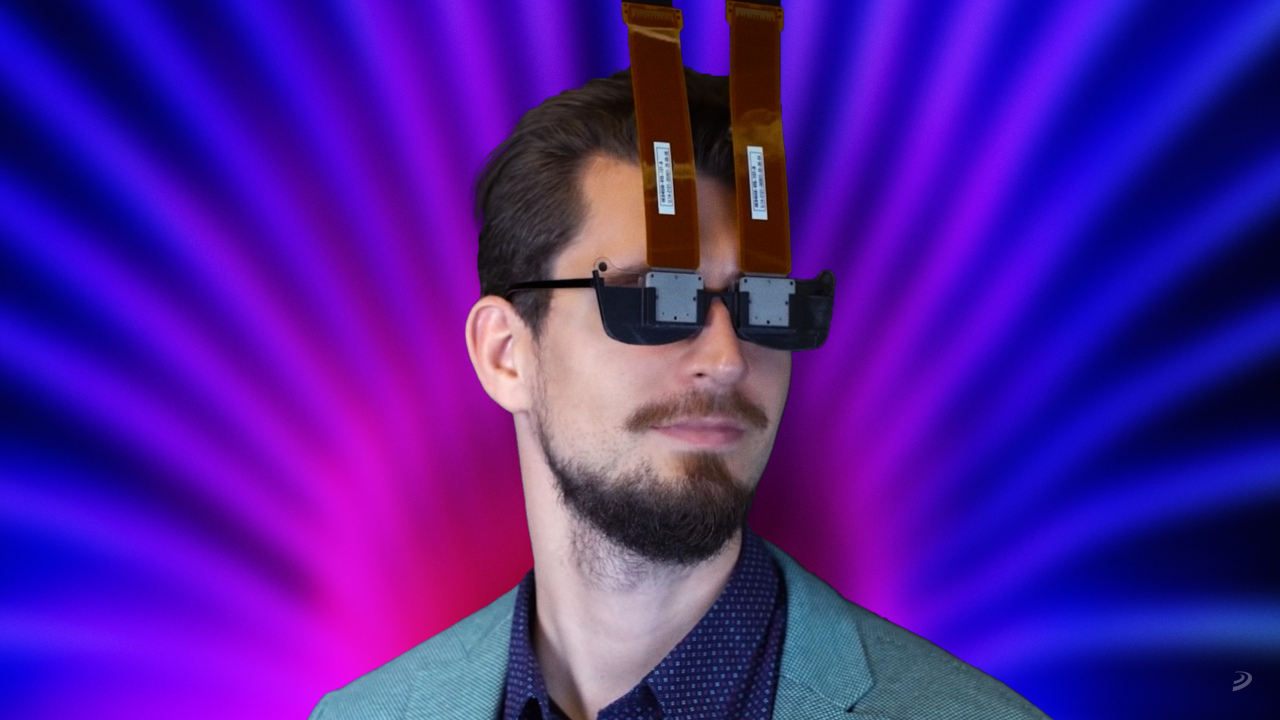
Don’t worry, when they’re finished it won’t look like you’re going to a summer festival.
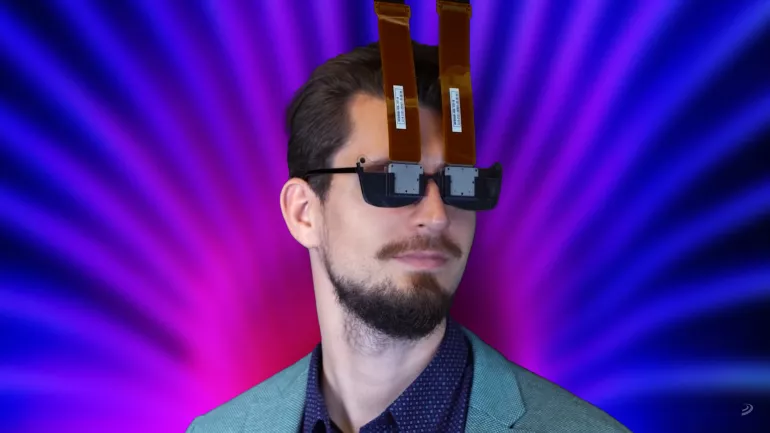
A research team formed by people from Stanford University and Nvidia. are working on developing VR viewers that are closer to what ordinary glasses are, a bit like the Ray-Ban glasses with which Meta can spy on you better, but for playing in virtual reality. Don’t look too closely at the prototype as they have it set up, because those tapes that sticking out the top are part of the actual prototype.no more.
The team has published a paper in the scope of Siggraph 2022, and in it they have hit the nail on the head with an idea that takes has been haunting the VR headset market forever.One of the major stumbling blocks to the widespread deployment of VR technology […] Is how bulky the existing VR panel designs are and. how cumbersome they are“. This is the starting point for the elaboration of what they call “holographic glasses“.
This device is capable of. generate a 3D image full-color image with as small as 2.5 mm thick overall. Remember that traditional helmets are built with lenses that magnify and adapt what a small panel projects at a certain distance. In other words, there is always going to be a space in between that will increase the volume of the devices.
In summary, reducing or eliminating these “dead” spaces has always been the key to making VR more viable for the general public.Regardless of image quality, fluidity, resolution, motion detection, etc., these technologies are of no interest to the general public. The average consumer is not interested in these technologies for more than a short time, because they are heavy and clumsygo.
That’s where the ones they call “pancake lenses“(seriously, they’re called pancake lenses), which are a type of lens that are also mounted on SLR cameras and not only provide a more compact design, but can also offer unrestricted resolution and a field of view of up to 200°.. Yes, such lenses have been used in the past, but only for viewing 2D content. The Stanford and Nvidia prototype, on the other hand, already manages to do the same in 3D.
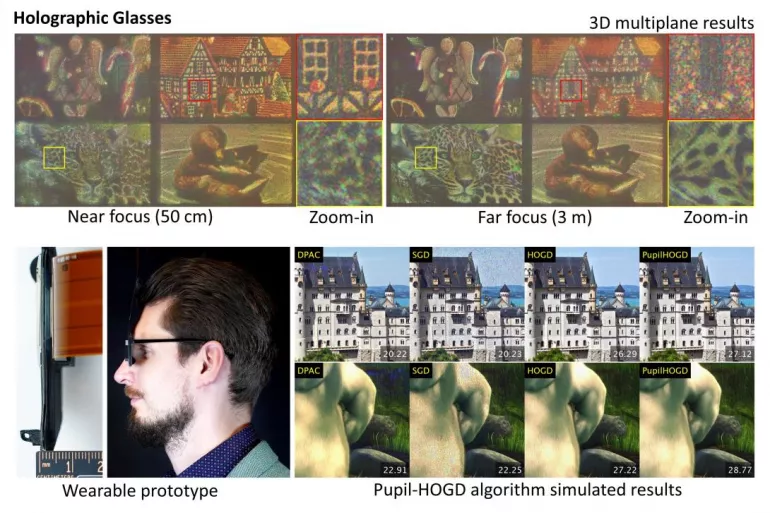
If you want to study the paper, go ahead, but for all practical purposes what it achieves is a functional device that weighs only 60g -much less than the half kilo that the Meta Quest 2 weighs. Moreover, although the field of vision is potentially larger than that of current helmets, the holographic goggles are still around 22.8º of vision.. This is mainly due to limitations of the available materials. In addition, the detection of the user’s pupil size.and that is key to its correct functioning, as can be read in the paper.
We do not want to translate the text as is, because it is scary, we are not specialized translators in scientific jargon and that should be charged separatelybut in short, the glasses work by making tracking the pupils of the user to generate a magnified projection on the lens. What does it look like for you?Would you dare to get into VR with such a device??
Image | Solen Feyissa (Unsplash)


